


Steelmaking at Port Talbot seems to be coming at an end after perhaps 900 years. There will still be recycling of scrap steel but the production of the highest quality steel from ore will cease. The UK will be down to one operating blast furnace in Scunthorpe.
Despite falling demand and very high energy costs in the UK, it doesn’t have to be this way. Port Talbot is staggering forward with a series of short-term sticking plaster solutions. Gwlad as a party wants to see Wales made successful with leading edge technologies. There is a way out through real innovation. Steel can be made using hydrogen, generated at almost no incremental cost by nuclear power. This is Red Hydrogen. The same process will produce oxygen, electricity, steam and sulphuric acid, again at very low cost, and all used in making steel. Red Hydrogen has the potential to overturn the steel market and make advanced industrial countries the suppliers of zero carbon low-cost steel.
What is Red Hydrogen? Our consultant, Customer Refocus, provides an extended explanation here:
https://gwlad.org/wp-content/uploads/2024/01/Red-Hydrogen-for-Green-Steel.pdf
…with further links to a discussion of the colours of hydrogen (though for that see also here).
Gwlad calls for Tata Steel, UK Government, Welsh Government and the steel unions to put together a task force to look at more than just sticking plasters to stop the bleeding. Deep innovation in Red Hydrogen that will positively transform the economics of the steel industry in the long term as well as massively reduce carbon output by leaving the electrical grid. In particular we call for a serious review of Red Hydrogen production not just for steel but for the Welsh hydrogen economy in general. Red hydrogen uses water as a feedstock and nuclear heat to produce a very low cost alternative to coke. The necessary reactors run at higher temperatures than current designs. The UK actually has some advantages in know-how on how to operate these. Once in place this will be a very low cost system to operate. Gwlad specialists are willing to help the transition committee, the Welsh Government and the UK government assemble this task force. Low cost steel will give the UK advantages in metalworking production.
Gwlad is the party that believes Welsh Independence needs to be underpinned by a strong market economy as the main priority to support an equally strong welfare state. The smaller independent countries of Europe have achieved this, particularly in Scandinavia or are well on the way to doing so in Eastern Europe. Tiny Estonia has already overtaken Wales in GDP/Capita. Ireland leads the European pack. The secret is the ability to build the local infrastructure around the strengths of the economy. The UK Government tries to make policy to serve the City of London but not manufacturing economies like Wales. Levelling up can never succeed. The neglect of technology development at Port Talbot is a case in point. Wales needs independence to build the right infrastructure for a revolution in productivity and an increase in prosperity through technology and the free market.
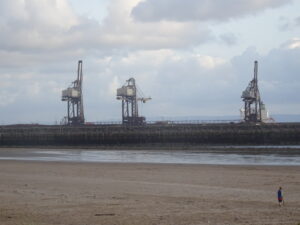 In the Welsh context very low cost hydrogen is not just about transforming the prospects of the steel industry. Wales has plans dating back 20 years to establish a wider hydrogen economy including transport, heating and industrial processes. There is even a car manufacturer, RiverSimple, designing hydrogen powered vehicles.
Hitherto, the hydrogen economy has failed to ignite because the hydrogen was made by electrolysis, i.e. the use of electricity to split water into hydrogen and oxygen. Electricity is expensive and changing energy from one form to another in a long chain is inefficient. It could not succeed. The plans for a hydrogen economy along the M4 failed.
Even at current prices, hydrogen is not quite dead. Various local authorities and Transport for Wales are looking at hydrogen power for heavy vehicles such as buses and refuse vehicles. Marubeni Energy has invested in Bridgend to address this market. The high cost of Blue hydrogen has held back these plans. The low cost of Red hydrogen, essentially just water, would allow these projects to surge ahead. There are other applications for hydrogen. It can be mixed with gas to provide heating for homes. Those who saw the lines of immobile frozen Teslas in Chicago will understand the inherent range limitations of battery powered cars in cold weather. Hydrogen cars are not affected. Hydrogen can provide storage to back up intermittent electricity generation and drive the chemical industry.
While an on site location for red hydrogen production in Port Talbot might integrate the steel making process, there are other options. Wales and the West Utilities has a proposal to build a hydrogen pipeline across South Wales (and there is another proposal in North Wales near Shotton), The Red Hydrogen plant could be located along these pipelines remotely from the steel works.
Wales also has industrial, academic and operational nuclear expertise. This is in part due to a legacy of process plant engineering thanks to the former presence of not just the steel industry but the petrochemical industry as well.
The University of South Wales has researched into Gold hydrogen amongst a diverse portfolio of other interests in hydrogen.
The Siemens and Bessemer processes for making steel were both invented in Wales. The Bessemer process was adopted at an early date by Tata Steel, an historical step forward for India. Fundamental innovation can be done again in Wales. The result can be licensed to countries capable of operating high temperature reactors overturning the economics of steel making and industrial location in Wales’s favour.
5 thoughts on “A Red Dragon to heat Port Talbot”
Question…. coal and coke are needed as sources of carbon… not just energy. How does Red Hydrogen provide this??.
Hydrogen is a reducing agent like carbon. The oxygen in the iron ore has a stronger preference for hydrogen than iron so it binds with hydrogen to make H2O instead of CO2.
Thanks Philip – I was not aware but have since found this example from Sweden. It looks viable.
https://www.hydrogeninsight.com/industrial/h2-green-steel-secures-4-5bn-of-additional-funding-for-world-s-first-large-scale-green-hydrogen-based-steel-plant/2-1-1586810
Great article Phil, a sensible commentary with a credible solution included. This solution does sound like a viable alternative but sadly I think the time required to deliver will be too late to save Port Talbot.
The only credible option now given the timeline is to hold our noses and allow the government to compulsory purchase the business to prevent asset sstripping and ready the business for onward sale to a domestic owner. As a strategic asset I could stomach the government intervention provided it was immediately made ready for onward sale with a small shareholding retained to recover any cost to the taxpayer. As part of that sale it should come with a full exemption from any green taxes, if the net zero target is a priority the other 80% should be addressed first other than the easy 20% produced by Port Talbot.
I think that these are ideas which Gwlad (and Wales) should adopt. Since the article was written, things have deteriorated in Wales. We should treat the vast area of flat land at Port Talbot, including the harbour, as ‘ground zero’ and build the 21st century of Wales there.