
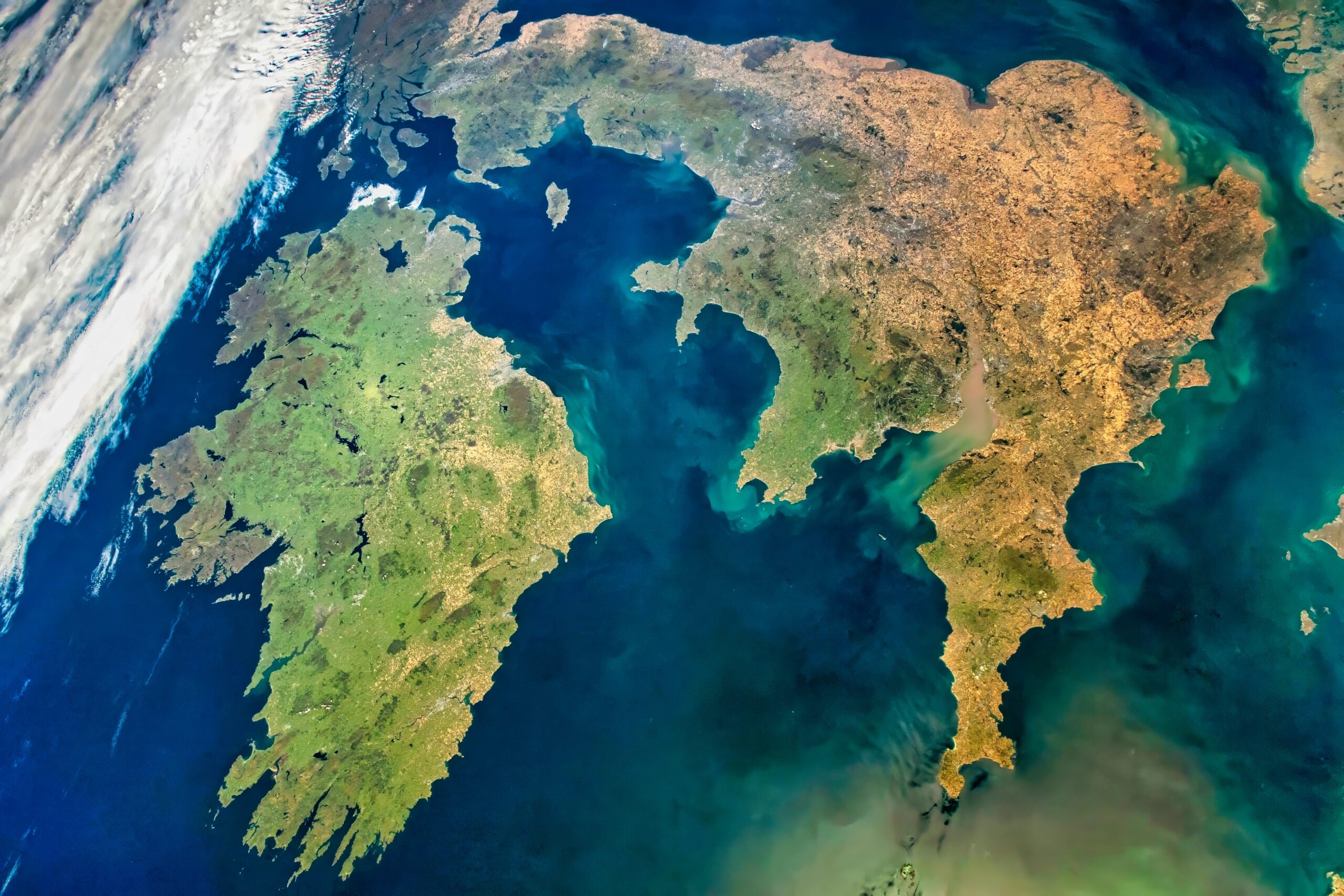
Noswaith dda. My name is David Smith. I’m a two-time Gwlad candidate (for the 2021 Senedd and 2023 Holyhead Town Council elections), a software engineer by trade, and a molecular biologist and bioinformatician by education.
 Over the years, I’ve moved between Wales and England for work and study. These journeys have blended both professional and personal experiences. They’ve shaped me into a proud denizen of both Wales and Great Britain — and yes, that includes a strong belief in Welsh independence.
Welsh, British and Independent
As a Cymro, I trace my heritage back to the Celtic Britons — the original people of this island. I recognise I am, for now, a citizen of the United Kingdom. And I acknowledge the unchanging geography of Britain, regardless of its political makeup.
But I firmly reject the jingoistic version of Britishness — the kind wrapped in “Rule, Britannia” bombast and the fading glory of empire.
One of the reasons I’m writing this is to explain how I can believe in Welsh independence while still identifying as British. Some see that as contradictory. I see it as a necessary rethinking of what Britishness could mean — one where Wales is a fully independent state, yet still part of the shared geography, history and culture of this island.
A Citizen Reluctantly Claimed
Earlier, I referred to myself as a “proud denizen” — not citizen — of Britain. That wasn’t accidental.
I love this island and my home country. I also value our closest neighbour, England, and the bonds we share. But I’m a reluctant citizen of a British state that feels more like a straitjacket than a unifying force.
This state is no longer fit for purpose. It’s stuck in an outdated class system, propped up by privilege, cronyism, and glaring inequality. Despite calling itself a “multinational state”, it’s fundamentally undemocratic, skewed by England’s sheer size and dominance.
The Emotional Myths of Union
When people argue for keeping the UK together, their reasons are often wrapped in emotional appeals — like invoking the World Wars or warning of “Breaking up Britain”. These arguments are shallow and easy to refute.
For example: what does World War II have to do with peacefully dissolving a union in 2025? Honouring those who fought in the war should never be used to deny others the right to self-determination. The idea that defending Britain from fascism requires clinging to the current state is both disrespectful and misleading.
Germany, after all, is now one of our closest allies. Europe has changed. So too should our understanding of what political unity on this island means.
The Myth of the Inseparable Island
Some recoil at the idea of “dividing Britain”. But nobody is digging a trench from the Dee to the Wye. (Though if they did, I’d propose naming it Offa’s Deewyke, in tribute to its spiritual predecessor.)
Too many assume that the only way to be British is within a unitary British state — with Westminster firmly in charge. But shared identity doesn’t require shared government. Just ask the Scandinavians, Benelux countries, Iberians, Turkic peoples, or North Americans.
If they can hold shared regional identities without a centralised political union, why can’t we?
We Can Share Without Subsuming
Unionist arguments often boil down to the false choice between total union and complete separation. That’s not what we’re asking for.
No one in Gwlad — or any serious independence movement — is calling for isolation. We’re not demanding walls, borders, or the end of cultural exchange. We’re simply asking for self-determination within a framework of cooperation and respect.
Ironically, the same “British State” that claims to unite these islands actively divides Ireland. And its heavy-handed nationalism — what some now call Muscular Unionism — is only pushing people further away.
A Republican Who’s Open to Debate
I should also say: I’m a republican. Personally, I oppose the monarchy. But I’m pragmatic. If keeping the British monarch as head of state helps smooth the path to Welsh independence, I wouldn’t make it a deal-breaker. That debate can come later.
This is one of many reasons I prefer the term Welsh Republican over Welsh Nationalist. The latter has, unfortunately, become associated with narrow-mindedness and even hostility. That’s not me.
Subverting the Stereotype
I want to challenge assumptions about who supports Welsh independence. I’m a first-language English speaker from Holyhead — a town shaped by centuries of English and Irish influence. I’ve lived and worked in England for years.
I believe my background puts me in a good position to have meaningful conversations with others who might not yet support independence — but could, if they saw themselves reflected in the movement.
Independence Through Internationalism
What underpins all of this is a belief in internationalism. I value cultural diversity. I love my own heritage and respect that of others. The word “foreign” has always sounded too harsh to me.
I’m more comfortable thinking of Wales as a state within a shared island, not as something separate from it. That outlook may not appeal to those who see the world in binaries — British or foreign, inside or outside — but it’s a perspective I think we need more of.
A Challenge to Unionists
I have a question for the Conservative and Unionist Party. If your goal is to get government out of people’s lives, why are you so determined to preserve a sprawling, overbearing British state? Why does our cooperation need to be managed from above?
We’re often mocked as “separatists” or “nationalists”. But if you’re calling us nationalists, aren’t you conceding that Wales is a nation? And if so — doesn’t it follow that it should govern itself?
Saving Britain from the UK
I believe it’s time to save Great Britain — by letting go of the United Kingdom.
That might sound radical. But look at how poorly the UK is working. Wouldn’t it be better to keep what works — shared trade, culture, cooperation — and discard the outdated structures that don’t?
We don’t need “Radical Federalism” or some complicated new arrangement. We need a simple, honest solution: independent nations, cooperating as equals.
Breaking Up or Growing Up?
Yes, Britain is a relatively small island. But within it live three distinct and ancient nations — something even the UK Government acknowledges when it refers to the “home nations”.
The phrase “Breaking up Britain” may be catchy, but it’s misleading. Independence isn’t destruction. It’s maturity. It’s recognising that real unity can only come from mutual respect — not forced cohesion.
A New Kind of Britishness
This is my pitch for a new way of being British. One that doesn’t depend on a British State. One where you can be proudly Welsh, deeply British, and politically independent.
And this idea isn’t as far-fetched as it might sound. We already have a working model: the Nordic nations.
Denmark, Sweden, Norway, Finland, and Iceland all share history, culture, and identity — without needing a single supranational government. They even have similar flags. Norway isn’t in the EU. Finnish isn’t even a Germanic language. And yet they thrive together.
So I ask: what Denmark has in the Nordics, why can’t Wales have in Britain?
And no matter the politics, who can deny me — a Briton — the right to claim this island as my home?
1 thought on “I, Briton”
Great post. Yes, we need a new kind of Britishness of politically distinct nations, co-operating on the basis of mutual respect.